UPDATE: The mentioned memoir is now published and wonderful and available here: In Search of Teressa
Autism asks challenging questions, begs us to think outside the box and then...Autism Answers! Musings, shared family stories, book reviews, and short fiction. My posts are rarely specifically about autism or parenting. They are, however, almost always stories grown from the fertile and organic thinking soil that can be found where the two come together.
UPDATE: The mentioned memoir is now published and wonderful and available here: In Search of Teressa
This piece was originally published on Disabled World

My two youngest sons walking and conversing
Language matters, full stop.
However, it doesn't follow that we have to use the right words.
The power of language is more about knowing our words are tools we use to share something grander than the words themselves. Hence, they - our chosen words and phrases - are fantastic clues to what we think and believe as well as powerful influencers. Different cultures have different histories with words. Different families have different histories with words and phrases. And different people have different histories.
If we tell someone who is autistic that they, in fact, are not autistic but rather have autism, we may be shutting them down in ways we don't understand. However, if we are in a position to communicate with that person and share that thought, that we see a difference between being something and having something, we open up the potential for powerful insights. For all of us. (BTW: My brother is autistic. :D )
If you ask me, "What's wrong? You look sick," because I look sick to you but I feel completely fine and your question has me feeling like I look tired and ugly, it is because words are powerful. But you didn't use the wrong ones. You reached out and cared. I can react by suddenly feeling tired and ugly (a reaction I've had) or by telling you not to say "what's wrong" because those are wrong words (a reaction I've been tempted to have) or by taking time to laugh at how tempting those reactions are simply because you asked what's wrong and thought I looked sick (a conversation I've had). You might then giggle with me and continue to reach out to people by asking what's wrong. Or maybe you'll shift your language but still reach out. Or maybe you'll be afraid to reach out at all.
Again, it's just plain truth that words and phrases matter. From the small everyday framing (What a horrible day vs what a difficult day vs what an exhausting day, etc) which infect our moods and influence our behaviors, to the ones we love to argue for or against in certain circles.
When we argue against a word or phrase it's usually because we understand the harm a history has done with that word or phrase at the helm. We start having epiphanies and intense realizations about the word and how insidious it is. We want to throw it away and grow an entirely new way of seeing and speaking. When we argue against freaking out about certain words and phrases it is often because we have loved ones with different histories, we have seen too many people hurt by being afraid to use the wrong phrases, and we care about including everyone.
Also, sometimes we argue for or against because it sounds smart or righteous and we aren't thinking much about it at all.
I love a lot of people who are a variety of disabilities, orientations, histories, and colors. Some speak and some do not. They all want to communicate and have various challenges doing so. We do our best work when we pay attention to where the communication is coming from. Where the words are coming from and how they are affecting our beliefs and the inclusion of people around us. Languages are different around the world and words are not right or wrong, but the meaning behind them, the influence they have on how we treat each other and ourselves, is indeed real.
It is a wonderful idea, sharing how we feel about the words people use around us. It is a wonderful idea, being willing to shift our language when we recognize it as growing out of a belief that is unkind. It is a wonderful idea. It is wonderful.
Language evolves anyway and getting involved in that evolution in order to be a thinking person who is aware of the influence it has on us, as well as the clues it offers to who we are, is meaningful.
Language is a wildly interesting and powerful thing. It would be
sad, I think, to shut down conversations about it entirely. But to shut
down people for the words they use is also sad. My brothers use the word
retarded easily and comfortably (they are aware of the diagnosis from
their childhoods) and it looks good on them. They are not name calling,
they are talking about themselves and sharing insights. When someone
tries to tell them retarded is a wrong or bad word, they confess to
feeling shut down and shot down. [My mom wrote these two wonderful posts that highlight the brilliance of my brothers when using socially unacceptable words and behaviors: Reality Retarded and Before You React, Read On ]
However, when I've talked to them about why some people say that about the word, we have fabulous conversation. And they understand it, but don't agree. At least not at the moment, and not for them. And that's because they are thinking people taking the time to follow clues about where their words come from.
So let's pay attention to language. Let's share what we're discovering along the way. Let's watch our words. But more than the words themselves, let's watch where our words are coming from and what beliefs and behaviors they are fostering.
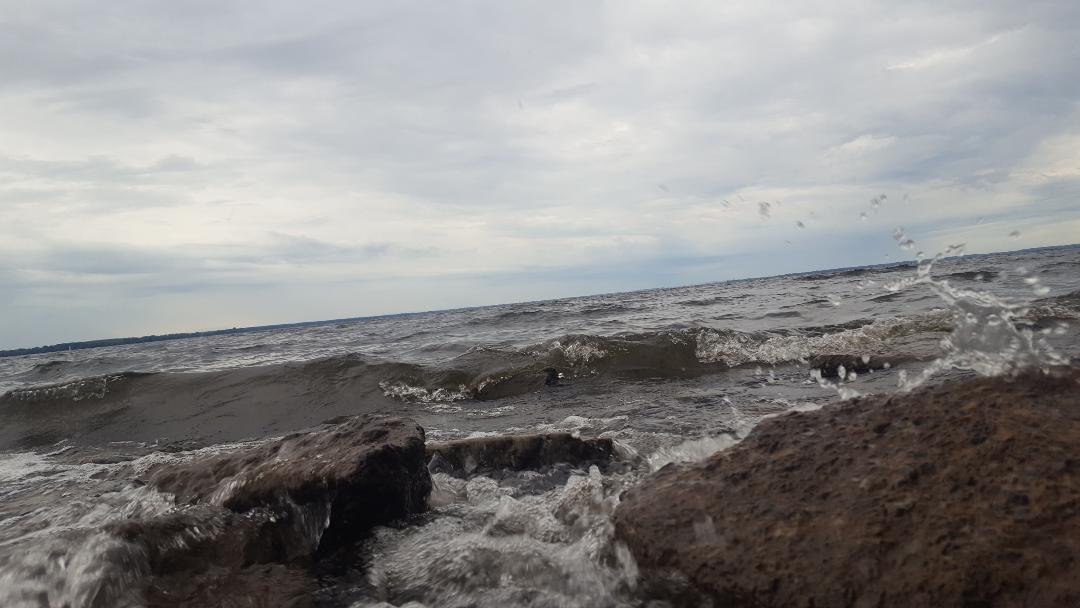
![]() |
| Waves hitting rocks by the river |
![]() |
| A pic of my oldest son with words he wrote about judging |
I know, I know, I know: if I'm not judging you then I must be okay with everything you do, right? I mean, I don't judge. You do you.
Sometimes, that works fine. If I'm not judging you I can still choose to walk away, to judge your behaviors and beliefs as not for me, not my jam.
But what about my kids? My grand-kids? My closest friends and family? Do I just let them do whatever the heck they want without asking for, teaching, and insisting on change? Nope. Obviously that doesn't make sense. It doesn't connect us, it doesn't help us help each other.
And it sets us up for being abusive and being abused.
It's often not easy or obvious, and for sure mistakes will be made, but we should remember that asking for change, or teaching a different way to be, is not inherently judgmental, critical, or fault-finding. It can be, when we're being intolerant and hence telling a person to be a different person. But it isn't true that if we are not judgemental we won't ask people to shift, change, grow.
In fact, when you ask yourself to shift, change, and grow you may notice you do your best work when not sitting in judgement of yourself but, rather, seeing where your habits, behaviors, and beliefs are hindering or hurting you and trusting yourself to make changes. It is beautiful. It is an evolving of yourself that you influence. Not by hating something about you but, rather, by choosing a new thing. When you're busy hating a thing, you keep it alive. You feed it and give it power. It keeps you busy hating it and there's less time for changing it. When you instead see it as a hindrance, or something you were mistaken to believe, or something that once helped you but now hurts you, you more easily move on. (Er, more easily. Not always easily.)
We can do that with our loved ones. Growing up with autistic brothers gave me a unique perspective. Actually, it was growing up with autistic brothers and a mom with unique perspectives that gave me a unique perspective. But I saw first hand the differences between experts being fake nice with my brothers, judging them as less than or broken inside, while trying to force them to be different people vs my mom who saw them as born beautiful, burdened with overwhelming challenges, finding ways to handle those challenges that were, sometimes, less than ideal, and worth all the hard work and curious nature she could muster to help them be them, but in healthier safer ways. She raised the bar with my brothers and insisted they could be successful. She was almost merciless in her insistence, but she always considered who they were and what they wanted as she urged them to shift, change, and grow.
It's hard to explain the difference, but it is all the difference. Seeing people as generally awesome inside, navigating their world, the world their body and environment provides, and probably needing help from others along the way, is a non-judgemental view. We all need help from others along the way. Which is wonderful. That's how we learn about others.
Seeing different people with different styles as different rather than wrong is what we're after, I think, but that doesn't mean we can't ask for change. For growth.
Silly example:
When I was thirteen my mom confronted me about something, I don't remember what, but I know it had to do with my behavior at the time. I responded in a fun way. I chose to punch her over and over again on her thigh while screaming, "I hate you! I hate you! I hate you!" I was mature for my age. tee hee!
Anyway, she didn't say it was okay for me to do that. But she also didn't think I was bad or wrong for doing that. She reached into my torment and asked why I was doing that, made sure I knew I must never again do that, and helped me figure out a different way to navigate my pain. (Our pain? I did punch her.)
This. This is what it can be to love someone without judgment but with expectations of change.
It worked, too. I never said mean things to her ever again. (Mom, if you're reading this, pretend with me, kay? giggle!)
This is my long winded way of attempting to remind us of the thing I often need reminding of: It is okay to ask someone you love to change. It is okay to ask someone, including yourself, to behave differently. It is more than okay. It is what love often looks like. It is necessary, I believe, to practice knowing when to do so and knowing not to hate or think bad and wrong of the person, or even the behaviors, you are hoping to change. The behaviors are all symptoms and clues. The person is the seed.
Also, it is necessary to practice being open to the possibility that we ourselves are the one who may want to change. I can't tell you how often I would be asking a brother to change, to be more like something I thought was better, when suddenly I'd realize this was not one of those times when I knew better. This was me asking him to be different for my convenience.
Note: I said "I can't tell you how many times..." but if you look through my blog you will see that I have certainly tried!
Anyway, long story short: Don't judge the people you love, including yourself, but do believe in and teach change.
I guess I could have just said that, huh?
"We write to taste life twice; in the moment, and in retrospect." ~ Anais Nin
![]() |
| eye glasses on a glass table, out of focus furniture in the background |
The kids all crowded around the game table—
Wait, I say kids and perhaps you imagine young children. The playful energy, adults necessarily nearby watching for mood shifts and play gone too far. You think of little voices, shy little ones, hyper boys ready to push.
But I’m referring to young adults. They are kids to us older adults who either birthed them, or are relatives of those who birthed them. Now that I’ve clarified, you picture similar but different people, right?
There is still the high energy, some are shy, maybe hyper boys pushing each other, but it’s different. Adults are watching in this case as well, but with less likely need to step in, though not none.
Did I mention alcohol?
Ah, maybe shift a bit again. There is alcohol. It’s a birthday celebration for the youngest cousin who is now drinking age.
There are about ten of them. Mostly girls, a few boys, all decked out in swim gear and sporting sun kissed cheeks, sun burnt shoulders here and there. The shy one isn’t overly shy, the boys not any more hyper than the girls. It is sunny, there is a pool near the game table, everyone is getting along, the older adults are fairly relaxed and enjoying the beautiful scene.
It is beautiful.
Should I,
I’m honestly asking, describe beautiful people in order to ask you to
picture the scene beautifully?
What color
skin should they have? What sizes should their bodies be? What disabilities
should I include, if any? Sure, you'll want diversity, but to what degree?
I was there and it was beautiful. I could clearly feel that. I enjoyed the range of conversations and energy styles. I loved noticing how some of the cousins reached out to newly introduced friends. How some sons and daughters delighted in a social opportunity of this sort.
It got a little less beautiful, in my opinion, with more alcohol.But, for several hours, it was all simply beautiful.
Kids and adults alike.
However, I ask in earnest regarding appearances of people because, I confess, I hardly noticed and I cannot accurately describe much of what they looked like.
Yet, at least one of the adults (in our older adult group) said enough things about physical appearances that I couldn’t help wondering, not for the first time, what don’t I see?
Comments wanting to become conversation on weight, skin health, ethnicity, and the like, were confusing me a little, giving me a feeling that I am missing something.
Yes, I do see our outsides. I see weight and color and skin. But it is a part so included in the whole that it’s not often specifically noticed. I am aware of the clues on our outsides that point to how we’re doing on our insides and so I don’t try to not see. Yet, for much of my life I’ve noticed - based on the comments of my peers - I am often not seeing what they are seeing. My mom has pointed it out to me a few times, so I know I’m not wrong. A room full of people can be commenting on how something or someone looks, and I often don’t see what they see. (Please note, I don’t mean only bad stuff. I’m not talking about gossipy comments, although I do mean those as well. I’m referring to simply noticing how people and things look.)
This sometimes feeds a worry of mine, about myself.
A little after the birthday celebration, a celebration where most of us were waltzing around in swimsuits, I was asked if I had felt comfortable, attractive even, at the gathering. Ummmm…. I felt hopeful that I was not too boring, wanting to be helpful but not get in the way, curious about these people – many of whom I was meeting for the first time – and their stories. Was I supposed to think, also, about appearance? About looking appropriately, I don’t know, good?
Oh, sure, when I first stepped into the yard wearing my swimsuit, my hair unwashed and sloppily ponytail-ed, I was wishing I’d shaved my legs and bikini line, wished my bathing suit wasn’t the wrong size putting me in the position of having to adjust it more often than I’d like. At one point I was told there was dark under my eyes so I presumed I was looking a little old and tired. But I simply shrugged it off and continually stepped into the group hoping to add something beautiful. A listening ear, a helping hand, an interesting, maybe even funny, story or two.
I didn’t much see what I look like or what others look like.
I have wondered this before. Is being “body positive” more than being comfortable in my body? Am I missing something when I don’t much notice the differences, the variety of beauty? When I don’t see what they see?
And I have wondered often, did I embarrass someone? For lack of understanding, for not knowing what I don’t see, did I embarrass someone?
I know I sometimes do.
“Mom,” my youngest son once said in his usual thoughtful careful manner, “could you please come to my school event, but wear pants that don’t have so many holes in them?”
I don’t pretend to not see at all. I recognize a neat smile, eyes that are unique, an extra long beard. But, as I said, it is all part of a much bigger whole.
Books and covers, I was thinking about before sitting down to write this out. I do notice myself attracted to a book cover based on looks. If it looks like the type of texture that feels good in my hands, if it has colors and images that appeal to me, I notice. I think my attraction is in large part due to the experience of knowing which colors and styles are popular in my favorite genres. I see it and want to touch it, to know more about the story and feelings I might find inside. It is quickly more than the cover. As I read the hints and meaning represented on the cover reveal themselves. They change for me.
The kids, I guess, were like covers on books. People were looking at them and seeing more than I was because the other adults knew them better. They knew more of the stories inside and, hence, were able to recognize more meaning beyond the cover itself within the cover itself.
I saw them too, but not as much with my eyes. Hardly with my eyes. I guess, since kids are not books, there wasn’t the need to pick and choose which ones to pay attention to, which cover to reach out and hold. Their stories would simply reveal themselves and I was open to all the genres around me.
I do try to
use seeing more, but I often get it wrong. My mom has noticed. She’s noticed
for years. I don’t seem to see what others are seeing. My sister has noticed, too. When I have been watching her kids in her house and she comes home, she's learned to be careful not to immediately say, "I need to clean this house," because, most likely, I think I already did it for her. I often see clean, I often see not broken, when others see dirty and broken.
I don’t mind, mostly. This is not a huge issue and hardly worth exploring. But sometimes I worry that it means I am the reason everyone is feeling uncomfortable, and I don’t know it. Because I don’t see right, I might not know how wrong I look.
I don’t see quite the same as others so when I try, I worry I’m getting it wrong. The point is, to fix it I’d have to see what they see.
Here’s the rub, I mostly like not seeing. It is a newer discovery about myself. I like it. I like hardly noticing these things.
And it is hard to learn a new skill. So, maybe I also like liking it, so I don’t have to learn.
There is the risk of missing an important clue about a loved one or myself, a change in appearance that is a symptom in need of investigation. So far, though, others have been helpful in pointing these things out. (Recently, when a cat was losing weight but I hadn’t noticed, the problem was addressed, because other people noticed.)
So, for now, I think I like not seeing.
Do you see?