Saturday, September 24, 2022

Autism Answer: Without Wings (Short Story)


It was all inside. The nourishment, the entertainment, the company. The sharing of ideas, the music that swayed and swelled and invigorated those ideas, the others with their news and affections. It was all inside today.
 
Platforms rested at open WIWS (Walk In, Wing Span) windows while individuals, groups, families flew up, landed, went inside. Simply went inside. 
 
Wanting to go inside, to have what was inside, I wandered around, looking for the special entrance made for me. For others like me. While looking for my entrance, I couldn't help but also look for someone similar to me; another someone needing the special entrance. I looked partly to remind myself that I was not alone, and partly to follow them in as I couldn't seem to find the entrance myself. 
 
I wasn't in a hurry. I'd gotten here early knowing that sometimes getting inside takes me a little longer than the others and I did not want to feel anxious about time. Plus, I have to pay attention to the places I put my feet in order to stay safe, and I like having time to stop and look up at the world. So I am here early. As are those I see entering welcoming WIWS windows now.
 
Often our special entrances would be signed clearly, often not, but usually there is at least one for buildings such as this, and I really wanted to be part of what was inside, so I kept looking. The ground is not easy to traverse because, well, most others simply fly over the rough stuff. So it isn't cared for in the way it could be. Admittedly, there are a lot of people like me, but many of us don't often find the desire for what's inside and up high worth the work of getting to it.
 
Today, I do. But as others fly up to the busy perches, move swiftly into the open windows, the sound of chatter and music raining lightly down on me, I see they are mostly too busy or rushed to notice me, to offer assistance. They aren't cruel; they are simply on their way somewhere and focused. I don't want to interrupt their flow so I continue climbing over obstacles and seeking a sign for my entrance. I don't ask for help up.
 
I have still not seen another like me today, and can't help but wonder if I am being too insistent on taking part of what is inside. I mean, after all, once I do find the entrance and make my way to the gathering of wonderful things up high, will it really be so wonderful? I'll be tired, they'll be busy, I'll have to find my way back down. But, I remind myself, by then I will know where my special entrance is at least. 
 
And this cumbersome ground is simply that. Cumbersome. Challenging. Not impossible. I can do it, I have done it, I will do it.
 
Today, I want what is inside. Today, I want access to wonderful companionship, nourishment, ideas. 
 
Someone smiles at me as they fly by, nodding and moving swiftly upward. I think I see them point in the direction I'm walking... 
 
Oh, I see it! Barely fifty feet away, beyond a noticeable crack in the ground I know I can make my way across. The crack is not too large, but it is large enough that I see it before tripping into it. It is simply a hop for me when I get there. I see the sign "Without Wings" above a lovely little door leading inside. 
 
I know today will be worth it. I will open the door, which should be unlocked, and head up the stairs, which I know will be in okay condition - the laws insist they be safe enough - and though I'll be tired by the time I reach the floors above where everyone is gathering for today's meeting - an important meeting meant to discuss and decide important things - the ideas, nourishment, and music should help perk me up rather quickly. Once inside I know I will require a modicum of assistance, some help having access to things available on higher perches and platforms. Places like this are designed by those with wings so why would they not incorporate all that space up high? For people like me, though, they will kindly help. In fact, in most instances, they will like to help. In general, we all like an element of helping. 
 
I, unlike the majority, am without wings, and I am here. I intend to add my ideas to the others. To let my ideas fly, without wings but amongst them. 
 
Today, for me, it is worth it. I feel certain of it. 
 

Friday, September 2, 2022

Autism Answer: Teeth Aren't Supposed to be Bright White

I don't know why it bugs me as much as it does, this culture of wanting a pretty white smile. Okay, maybe I know why. There are a few reasons.
 
Reason One: bright white teeth are not natural. Yes. our healthy enamel has a natural white hue to it, while the stuff underneath (dentin, according to my search engine) is yellowish. In general, healthy teeth are yellowish in color, though everyone is different. If your teeth are naturally white, they can be healthy. If they are naturally quite yellow, they can be healthy. But presuming white teeth are the prettier, better, healthier, cleaner teeth just isn't true. 
 
Reason Two: my autistic brother, Dar, has quite yellow teeth. They are also quite healthy teeth. He is lucky that there's a fair amount of space between them, they're easier to clean that way, and he doesn't have the best motor skills so excellent tooth brushing doesn't come easy to him. Forget flossing! However, his big beautiful smile, when bestowed upon people, is sometimes followed up with a comment on the color of his teeth. I'll say it plainly: A lot of people look at my brother and see a disabled man with yellow teeth, the yellow teeth adding to their already predisposed discomfort around a disabled man, due to their predisposed discomfort around yellow teeth. 
 
Reason Three: I feel like (and here I admit it's simply my feeling, I've done no research or anything) there is enough money being made in the tooth whitening world that it will be really hard to shift this frame of mind. I mean, with the money being made it's gotta be worthwhile to keep pushing this "whiter teeth are better teeth, of course you want whiter teeth, we can sell you whiter teeth" narrative. And with little to no tooth sensitivity, too! 
 
Reason Four: speaking of money, the insidious bias that whiter teeth are better teeth means we practically can't help but judge each other as cleaner, healthier, classier, when we have whiter teeth. So to get ahead in the world, maybe we should whiten our teeth. Because that's how you get the job, the partner, the trust, the great customer service, by appearing healthy and clean. A nice clean healthy someone we want to be around. Which means you need to have money in order to whiten your teeth (even if you choose to use oil pulling, the oils cost money) so you can get the job, the partner, the trust, the great customer service. 
 
Reason Five: I think I'm bothered because it works on me. I get excited when my teeth look whiter. I take note of what toothpaste I used that made my teeth looker whiter and I try to find it again. This is fine, as is whitening your teeth if you want, but I don't like how insidious it can be. How I feel more comfortable smiling when my teeth look whiter because I know the receiver of my smile won't be awkwardly distracted by the yellow of my teeth. A natural yellowish healthy tint of teeth should not unfavorably color the joy of a smile. (Okay, I admit to barely actually thinking about the color of my teeth when smiling, but it does happen now and then.)
 
I feel like the whole "having white teeth is better" fiasco is an example of a lot of things that simply go too far. Things that go from misinformation to disinformation. Yes, teeth are stained by things we eat, drink, and do. Smoking stains them for sure. So can my beloved coffee. Also, malnutrition breeds less healthy everything, including teeth. As does poor mouth maintenance, leading to discolored teeth. This feeds the misinformation that white teeth, then, must be clean cared for teeth while yellow teeth must be stained neglected teeth. Then, when people start selling tooth whitening products, the misinformation turns to disinformation. The advertisements insinuate that, clearly, you want whiter teeth because those are better, so here's why you should get those whiter teeth with our product. Everyone we like to look at on our screens has white teeth, unless they are the homeless one, or the junkie. Etc. We are purposely sold the lie that the whiter the smile, the cleaner and better and more successful and healthy is the person behind the smile. 
 
I know, I know, it's silly. It's not a big deal. Whiten your teeth if you want to. I continue to smile easier when I know my teeth are whiter. 
 
But it's too bad, isn't it? Wouldn't it be cool if we all agreed that teeth can simply be healthy? Not have to look a certain way to prove it? Let them be missing, crooked, far apart, crowded. Fix the stuff that makes it harder to be healthy, let the rest be beautiful in it's own right. That would be nice. And more affordable.
 
When my brother smiles big, when he makes direct eye contact and gives a huge from the soul of himself grin, it is bloody gorgeous! 
 
Those far apart yellow teeth of his rival the sun for the light they bring into a room. 


My brother, Dar, in a pool wearing his gorgeous grin


Tuesday, August 16, 2022

Autism Answer: Ample Breasts


Me sleeping and breast feeding

 
"Can I give feedback that's personal?" 
 
"Of course, that's pretty much the feedback she wants. While you read the manuscript make note of where you get bored, if you feel confused, where it seems redundant, and especially any personal reactions to the story. That's totally interesting and useful to her."
 
"Okay. Like, when she writes about granny's ample breasts, that's yucky. That's not something the reader needs to know, it's yucky."
 
Meagan, an eighteen year old college student, was reading and reacting to the first draft of my mom's upcoming book, the true story of a woman with multiple personalities. A woman my mom is living alongside and becoming good friends with. [If you have not already read some of my mom's published books, I highly recommend them! Follow this link to have a peek... of her books... not breasts... tee hee!: Lynette Louise, The Brain Broad, Books ]
 
UPDATE: The mentioned memoir is now published and wonderful and available here: In Search of Teressa
 
Granny's ample breasts are, in fact, a relevant part of the story. 
 
"Did you just read that now?" I asked, wanting to know if she was reacting simply to any talk of "ample breasts" or if she'd continued reading and still didn't see the relevance. 
 
"Yes. It's yucky, mummy."
 
I was chopping veggies in the kitchen and Meagan had just come down from upstairs where, clearly, she had begun reading the book and was now feeling, well, yucky. 
 
"I don't think it's yucky. In fact, I think of that part often. I loved the image of a woman baking in her kitchen adeptly, after years of honing the skills necessary. Including contending with her ample breasts. They are in the way, they are heavy, and they are part of her. In fact," I added, while moving the chopped veggies from my cutting board to the skillet on the stove, not at all having to contend with my own not-so-ample breasts, "as you continue reading you'll discover that for many characters in the family, ample breasts are a relevant aspect of the story."
 
"Oh, so there's a reason for mentioning her boobs? That's different. I didn't know there would be a reason."
 
"Honestly, there's a reason for everything you'll read. But that doesn't mean mom won't want to know how you felt. She wants to know, for sure!"
 
"Okay, well I thought the ample breasts part was yucky." 
 
"And yet you are the one telling me you want to have a skinny body with ample breast," I teased. 
 
We giggled. She was getting herself a bowl of cereal while I was making a stir fry and as we moved fairly smoothly around each other in the kitchen, I added, "You know, granny would have had a harder time sharing a small kitchen with another person. Her ample breasts took up enough space as it is. And since people sometimes find ample breasts yucky she might have felt self-conscious and awkward and, in fact, told you to leave." We giggled again and Meagan went back upstairs to continue reading.
 
Can you imagine how much it could hurt if you were told it is yucky to talk about how you have to manage your own body? If you have a disability or difference that is natural to you but uncomfortable to others and you are told, or lead to feel as though, it is yucky to hear about?
 
When I was in grade eight I knew this girl, Roxanne. She had dark hair and olive skin. She was pretty and petite. And when I met her, her breasts were huge. She dressed to try and hide them, her posture attempted to do the same. But there was no getting around them. They were more than ample. She had to get a reduction, the first time I ever heard of such a thing. We knew, or at least I know I knew, there was so much more to her than her breasts but when we saw or talked about Roxanne, it was about the breasts. We were forever offended or interested in or otherwise occupied by the fact of her breasts. 
 
Even now when I think of Roxanne, I wonder how that must have been for her. Still, it is about her breasts. 
 
Now, I was not a friend of hers. I merely knew her. My bet is that her friends think of her more completely. Her family as well. But that does not mean her breasts were not part of her story. They obviously were. You cannot have something that drastic be unimportant in the story of you. Certainly it can be something that isn't impacting you later in life, I'm not saying we can't get past our past, I'm simply saying that telling the story of who we are involves the story of things we dealt with, including our bodies.
 
For many of us, our bodies didn't give us much out of the ordinary to manage or deal with. Which is why, I think, we might find it yucky to hear about people who do have much to manage or contend with in their own bodies. But we should probably not let the knee jerk reaction of "yucky" stop us from learning more. From caring to care and listen or read on. 
 
When someone includes their ample breasts in a story it is likely because that is a relevant part. Not simply to shock or sensationalize. Though, yes, that can be the case too. Which, of course, can also add something relevant. Learning why we are wanting to shock, or why we are feeling shocked. 
 
I turned off the stove, scooped some rice and veggies into a couple of bowls, and as I carried the food upstairs to where my love was working I caught myself wondering, would he be pleased if my body had ample breasts? Does he wish they were at least a little more ample? Should I wish they were ample? 
 
Interesting. Turns out not-ample breasts can take up space, 
even if it's only in my head.
😃
Hugs, smiles, and love!!
 
Random Addition: I included the pic of me breast feeding only because as I was thinking about what type of pic to use for this post, scrolling through my photos, I came across that one. It reminded me that I have had ample breasts before, when feeding my babies, which actually gave me an experience that helped me understand the relevance of the breasts in the story. When my boobs were full of milk they were in my way, they attracted a different kind of attention (not just by their size but also my comfort with their function as food for my babies), they were heavy and sore, they were something I had to contend with. These kinds of experiences can help us find empathy. At first, in the specific places where we have experiences but as we get older and have more exposure, we can better generalize and understand and believe in the experiences shared with us by others.

Friday, August 12, 2022

Autism Answer: Watch Your Words (Where They Come From and What They Do)

This piece was originally published on Disabled World


My two youngest sons walking and conversing

Language matters, full stop. 

However, it doesn't follow that we have to use the right words.

The power of language is more about knowing our words are tools we use to share something grander than the words themselves. Hence, they - our chosen words and phrases - are fantastic clues to what we think and believe as well as powerful influencers. Different cultures have different histories with words. Different families have different histories with words and phrases. And different people have different histories.

If we tell someone who is autistic that they, in fact, are not autistic but rather have autism, we may be shutting them down in ways we don't understand. However, if we are in a position to communicate with that person and share that thought, that we see a difference between being something and having something, we open up the potential for powerful insights. For all of us. (BTW: My brother is autistic. :D )

If you ask me, "What's wrong? You look sick," because I look sick to you but I feel completely fine and your question has me feeling like I look tired and ugly, it is because words are powerful. But you didn't use the wrong ones. You reached out and cared. I can react by suddenly feeling tired and ugly (a reaction I've had) or by telling you not to say "what's wrong" because those are wrong words (a reaction I've been tempted to have) or by taking time to laugh at how tempting those reactions are simply because you asked what's wrong and thought I looked sick (a conversation I've had). You might then giggle with me and continue to reach out to people by asking what's wrong. Or maybe you'll shift your language but still reach out. Or maybe you'll be afraid to reach out at all.

Again, it's just plain truth that words and phrases matter. From the small everyday framing (What a horrible day vs what a difficult day vs what an exhausting day, etc) which infect our moods and influence our behaviors, to the ones we love to argue for or against in certain circles. 

When we argue against a word or phrase it's usually because we understand the harm a history has done with that word or phrase at the helm. We start having epiphanies and intense realizations about the word and how insidious it is. We want to throw it away and grow an entirely new way of seeing and speaking. When we argue against freaking out about certain words and phrases it is often because we have loved ones with different histories, we have seen too many people hurt by being afraid to use the wrong phrases, and we care about including everyone. 

Also, sometimes we argue for or against because it sounds smart or righteous and we aren't thinking much about it at all. 

I love a lot of people who are a variety of disabilities, orientations, histories, and colors. Some speak and some do not. They all want to communicate and have various challenges doing so. We do our best work when we pay attention to where the communication is coming from. Where the words are coming from and how they are affecting our beliefs and the inclusion of people around us. Languages are different around the world and words are not right or wrong, but the meaning behind them, the influence they have on how we treat each other and ourselves, is indeed real.

It is a wonderful idea, sharing how we feel about the words people use around us. It is a wonderful idea, being willing to shift our language when we recognize it as growing out of a belief that is unkind. It is a wonderful idea. It is wonderful.

Language evolves anyway and getting involved in that evolution in order to be a thinking person who is aware of the influence it has on us, as well as the clues it offers to who we are, is meaningful.

Language is a wildly interesting and powerful thing. It would be sad, I think, to shut down conversations about it entirely. But to shut down people for the words they use is also sad. My brothers use the word retarded easily and comfortably (they are aware of the diagnosis from their childhoods) and it looks good on them. They are not name calling, they are talking about themselves and sharing insights. When someone tries to tell them retarded is a wrong or bad word, they confess to feeling shut down and shot down. [My mom wrote these two wonderful posts that highlight the brilliance of my brothers when using socially unacceptable words and behaviors: Reality Retarded and Before You React, Read On ]

However, when I've talked to them about why some people say that about the word, we have fabulous conversation. And they understand it, but don't agree. At least not at the moment, and not for them. And that's because they are thinking people taking the time to follow clues about where their words come from.

So let's pay attention to language. Let's share what we're discovering along the way. Let's watch our words. But more than the words themselves, let's watch where our words are coming from and what beliefs and behaviors they are fostering.

Hugs, smiles, and love!!

Tuesday, August 2, 2022

Autism Answer: Pick up the Trash


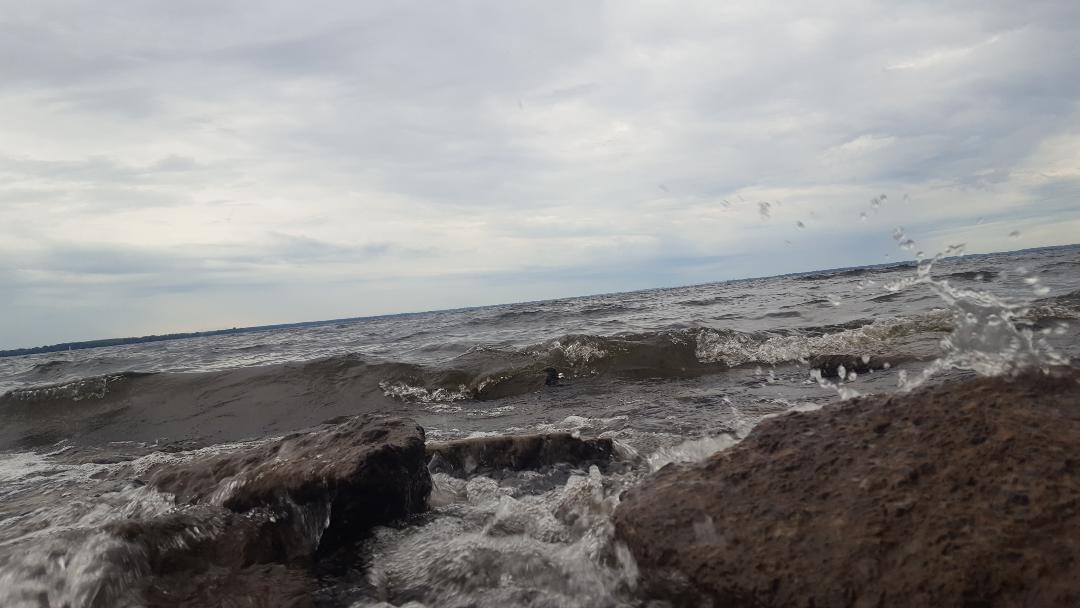
Waves hitting rocks by the river

The morning is dark, overcast, rain falling heavy for a moment then sitting in wait the next. I'm walking - coffee in hand - along the river. The crashing of waves on the rocks is my music. I'm staying near the cover of trees, prepared for the moments of hard rain. I am not alone. Surrounding me are busy squirrels and seagulls. The wildlife is close, but not scary close. I love this.
 
I see something on the rocks and recognize it immediately as a discarded mask. They are everywhere lately. 
 
I'm deeply enjoying the sound of water, the feel of the morning air, the smell of rain, the animals that are giving me my space while I spend time in theirs. Even the sound of a few cars driving past on wet pavement enhances the feeling of quiet joy for me. The mask bothers me and, for a moment, I want to walk a little ways away rather than pick it up and take care of it. I want to ignore it and simply pick a different spot to stand by the water where the mask can be easily forgotten.
 
But, I don't. 
 
Me and my coffee carefully make our way down to the litter, on the potentially slippery rocks, and pick up the mask. It's soaking wet but new looking, and I consider keeping it. My "reuse" reflex responds in this way often, and sometimes I agree with it. Often when I pick up trash I discover it is not even trash. But, not today. I will throw it away. There are so many trash bins here it's a simple thing. 
 
Heading to a bin I notice my moment has been changed. I no longer feel the same sense of peace, calm, and joy I had been oh so deeply enjoying. It had been a delicious moment, until that mask. 
 
And I could have walked a small ways away to continue the feeling. I could have easily forgotten the mask. I mean, it's one mask. I didn't save the world by picking it up. Pollution is still a thing. Heck, there wasn't even anyone there I was being a good example for. It was just one girl choosing to pick up one piece of trash rather than ignore it because it interrupted her moment of joy. 
 
Not allowing joy to be harmed is often the right choice. A choice that is different than not allowing it to be interrupted or shifted. 
 
My walk to the trash bin brought me farther away from the sound of water, toward the playground where I had parked my car. I tossed the mask and stood still for a moment. Which direction should I move now? Back to the water and attempt to recapture the sensory delights I had been immersed in, or toward the car where my mobile office waited and work wanted to get done? I chose the different joy of getting work done. 
 
My walk through the playground toward the car brings visions of my grandchildren to mind. I imagine bringing them here while their fathers (my sons) get work done. I imagine the little ones running around filled with joy while I play alongside them, thrilled to be a part of their lives. Thrilled to be part of my son's lives and able to help them get work done. 
 
It is a joyful imagining! A separate kind of fun from the quiet peaceful moment interrupted by the mask. But still lovely. Also, imagining the grandbabies reminds me of why I like to pick up the trash. For the future.
 
When I see it, something that should be cleaned up in order to not hurt someone or something in the future, that's the time to act. If I ignore it, it might fester. If I just don't want to do it and tell myself I'll do it later, I may lose it or forget. 
 
Now, if the rocks had been dangerously slippery, I would have not picked up the mask. Sometimes you see it, the trash, but it is not the right time to clean it up. Timing matters. 
 
I usually know when I'm avoiding something because I just don't want to take care of it vs when I'm waiting for the right time. 
 
Waiting for the right time is part of taking care of it, though. It is proactive. It is aware. Heck, sometimes it is enough. The shifts in behavior that happen while being aware sometimes clean up the trash. 
 
The morning is still dark, the rain is heavy now. I'm sitting in the car near a library while water pours down around me. The busy squirrels appear to have hidden in the trees. An airplane is roaring overhead and my mind soars with it, wondering when the next time will be that I fly somewhere. Will it be to visit my grandkids again? Or will it be to travel for the first time with my love to his long ago home, in Australia? A place I've not yet visited. 
 
I picked up trash that threatened, in a small way, the future. It was not what I felt like doing at the time. It shifted my mood and interrupted my joy. 
 
I love this. 
 
Hugs, smiles, and love!!

Thursday, July 21, 2022

Autism Answer: Don't Judge, But Also Do Ask For Change

A pic of my oldest son with words he wrote about judging


I know, I know, I know: if I'm not judging you then I must be okay with everything you do, right? I mean, I don't judge. You do you.

Sometimes, that works fine. If I'm not judging you I can still choose to walk away, to judge your behaviors and beliefs as not for me, not my jam.

But what about my kids? My grand-kids? My closest friends and family? Do I just let them do whatever the heck they want without asking for, teaching, and insisting on change? Nope. Obviously that doesn't make sense. It doesn't connect us, it doesn't help us help each other. 

And it sets us up for being abusive and being abused. 

It's often not easy or obvious, and for sure mistakes will be made, but we should remember that asking for change, or teaching a different way to be, is not inherently judgmental, critical, or fault-finding. It can be, when we're being intolerant and hence telling a person to be a different person. But it isn't true that if we are not judgemental we won't ask people to shift, change, grow.

In fact, when you ask yourself to shift, change, and grow you may notice you do your best work when not sitting in judgement of yourself but, rather, seeing where your habits, behaviors, and beliefs are hindering or hurting you and trusting yourself to make changes. It is beautiful. It is an evolving of yourself that you influence. Not by hating something about you but, rather, by choosing a new thing. When you're busy hating a thing, you keep it alive. You feed it and give it power. It keeps you busy hating it and there's less time for changing it. When you instead see it as a hindrance, or something you were mistaken to believe, or something that once helped you but now hurts you, you more easily move on. (Er, more easily. Not always easily.)

We can do that with our loved ones. Growing up with autistic brothers gave me a unique perspective. Actually, it was growing up with autistic brothers and a mom with unique perspectives that gave me a unique perspective. But I saw first hand the differences between experts being fake nice with my brothers, judging them as less than or broken inside, while trying to force them to be different people vs my mom who saw them as born beautiful, burdened with overwhelming challenges, finding ways to handle those challenges that were, sometimes, less than ideal, and worth all the hard work and curious nature she could muster to help them be them, but in healthier safer ways. She raised the bar with my brothers and insisted they could be successful. She was almost merciless in her insistence, but she always considered who they were and what they wanted as she urged them to shift, change, and grow.

It's hard to explain the difference, but it is all the difference. Seeing people as generally awesome inside, navigating their world, the world their body and environment provides, and probably needing help from others along the way, is a non-judgemental view. We all need help from others along the way. Which is wonderful. That's how we learn about others.

Seeing different people with different styles as different rather than wrong is what we're after, I think, but that doesn't mean we can't ask for change. For growth.

Silly example:

When I was thirteen my mom confronted me about something, I don't remember what, but I know it had to do with my behavior at the time. I responded in a fun way. I chose to punch her over and over again on her thigh while screaming, "I hate you! I hate you! I hate you!" I was mature for my age. tee hee!

Anyway, she didn't say it was okay for me to do that. But she also didn't think I was bad or wrong for doing that. She reached into my torment and asked why I was doing that, made sure I knew I must never again do that, and helped me figure out a different way to navigate my pain. (Our pain? I did punch her.)

This. This is what it can be to love someone without judgment but with expectations of change.

It worked, too. I never said mean things to her ever again. (Mom, if you're reading this, pretend with me, kay? giggle!)

This is my long winded way of attempting to remind us of the thing I often need reminding of: It is okay to ask someone you love to change. It is okay to ask someone, including yourself, to behave differently. It is more than okay. It is what love often looks like. It is necessary, I believe, to practice knowing when to do so and knowing not to hate or think bad and wrong of the person, or even the behaviors, you are hoping to change. The behaviors are all symptoms and clues. The person is the seed.

Also, it is necessary to practice being open to the possibility that we ourselves are the one who may want to change. I can't tell you how often I would be asking a brother to change, to be more like something I thought was better, when suddenly I'd realize this was not one of those times when I knew better. This was me asking him to be different for my convenience.

Note: I said "I can't tell you how many times..." but if you look through my blog you will see that I have certainly tried!

Anyway, long story short: Don't judge the people you love, including yourself, but do believe in and teach change.

I guess I could have just said that, huh?

Hugs, smiles, and love!! 

Monday, July 11, 2022

Autism Answer: Sweet Serenity


Serenity in my arms at her first birthday party


Serenity: the state of being calm, peaceful, and untroubled.
 
"Mom," my oldest son looked at me, concern surrounding him in a thick fog, contributing perhaps to the slow moving demeanor he appeared to have, "are you going to be okay? I have to take her to the hospital, are you staying or coming with us?"
 
Oh, I wanted to go. I wanted to be with him and his wife as their second daughter was born, but by some terrible twist of fate I was dizzy, pasty, unable to stand. Practically passed out on the couch as my son ran from one room, taking care of his labouring wife, to another, asking questions of his unexpectedly faint mother. 
 
"Maybe get Dramma. She can be with you and I'll stay here with Nevaeh." My mom could go with them to the hospital, and I would stay here, sleeping alongside my oldest granddaughter who was oh so soon going to be a big sister. 
 
My son ran up the stairs to wake my mom. I stood shakily up from the couch and went to my daughter-in-law, rubbed her back a bit while she lumbered wide legged out of the tiny downstairs bathroom. The roaring noise in my head was overwhelming and I was grateful it could only be heard by me and was unlikely to wake the baby in the other room. Even the labouring mom was moving with more grace than I could muster, and though the sound in my head was distractingly loud I could tell she was doing a good job of keeping quiet. 
 
Quickly, my mom and son came down the stairs. Again I was asked if I was okay, and asked if I wanted to go to the hospital, but again I opted to stay home with Nevaeh. They promised to keep me in the loop, photos and updates would be sent, and away they went.
 
With effort I moved my body toward the bedroom where Nevaeh slept. I saw her, there at the end of my fuzzy tunnel vision, tiny and sleeping on the big bed of her mom and dad's. A little baby, only one year old, about to become a big sister. 
 
Silently and carefully I crawled in beside her. I didn't want to wake her, but I had to feel her in my arms. I placed one arm over her and waited, she didn't move. I scooted my body closer to hers, I softly kissed her forehead, I felt myself drift peacefully to sleep. 
 
My phone was beside me on the bed, and I would open my eyes periodically to peek. Is she here? Is everything okay? It seemed things were moving along well at the hospital, and with each text or image that brought me closer to Serenity, I felt my body move closer to it's regular untroubled self. No longer feeling faint, simply bruised from it. 
 
Then, as Nevaeh stirred in my arms, in the wee early hours, I felt a true calm. I felt peaceful. I felt Serenity. My phone dinged.
 
There she was. Beautiful! Here! Born in a room I where I was not but where my mom and son were. Beautiful!
 
Nevaeh opened her eyes and looked at me with uncharacteristic softness. She is a sweet girl, but rarely is she calm and soft. She's almost always spunky and sassy. However, in that moment, she was serene. I showed her the picture and quietly announced, "There she is, Nevaeh. There's your baby sister, Serenity."
 
Nevaeh reached out and touched my phone with all the softness in the world. Her tiny fingers traced the cheeks on my screen. They moved slowly, softly. Soft small sleepy fingers touching the screen displaying her sister. I was overcome with love for these girls. These sisters. I was grateful, oh so grateful, to be there in that room. In that moment. Watching big sister trace tiny fingers over baby sister, happy and calm. Peaceful and complete. 
 
I put the phone down as Nevaeh snuggled into me to fall back asleep. Dreaming, possibly, of her baby sister. Feeling, in my arms, like a gift. A gift on her sister's birthday. 
 
Serenity: a beautiful baby, a sister, a daughter, a granddaughter, a niece, born four years ago this day.
 
Once morning arrived in earnest I brought Nevaeh with me to meet Serenity in the hospital. 
 
Serenity. There she was. It was a gift for me to share this moment - the moment of meeting Serenity - with my oldest granddaughter. The two of us having snuggled waiting for her, and now she's here. 
 
But I am also selfish. And I couldn't wait until my own moment, alone with Serenity. A moment I would get that night in the hospital.
 
It was my turn.
 
My son went home, my mom went home, Nevaeh went home, and I stayed. I chatted with my daughter-in-law, and walked the baby that night. Serenity woke up many many times, and I was fully there. Not faint. Yes, a bit tired, but oh so there. 
 
Serenity: my granddaughter, a child who helps me feel untroubled by the distance between us, calm in the certainty that we are not distant.
 
It is my fate as a grandma to only sometimes be there. The day Serenity was born was my first time choosing so clearly not to be there. It hurt, but became beautiful too. 
 
Today Serenity turns four. Once again, I am not there. Oh, I want to be with her! I want to hold her, sing to her, talk about how stronger she is with her. (When I saw her last month she woke me up every morning to show me how stronger she is. 😃
 
But it is also beautiful where I am, who I am with. Hence, it's okay. Serenity knows I am there when I can be, and when it's the right choice for us. Well, she doesn't know, she's only four, but she feels it and I hope one day it will grow into a knowing. 
 
In the meantime, I will always be here for her. Wherever my here is, wherever her here is, she has me.
 
Happy birthday sweet sweet Serenity!
I love you!
 
Hugs, smiles, and love!
 
 
"We write to taste life twice; in the moment, and in retrospect." ~ Anais Nin