Showing posts with label Special Needs. Show all posts

Wednesday, April 30, 2025

Autism Answer: Autistic Communication - a conversation

 Originally published in  The Loop


Mom & Dar

 Communication
 The exchange of thoughts, messages, or information, as by speech, signals, writing, or behavior.

My mom has been teaching the value of believing in, listening to, and raising the bar for people my entire life. I am the oldest of her eight children and admit, it didn't come natural to me, this believing beyond appearances thing.

But in our home we were not allowed to ignore ideas that might uncage people. Specifically, in my youth, my brothers.

So I pretended. I pretended I believed my four adopted brothers were as capable and "like us" as my mom clearly wanted them to be. I pretended, but with mom's consistent guidance it wasn't too long before pretending shifted. Not only for me, but for my brothers and others as well.

My brother, Dar, who is most severely impacted by autism, was the most challenging for most of us to recognize as relatable. Sure, he was handsome, but the jumping, rocking, stimming - none of it seemed to be for reasons anyone could fathom.

And goodness knew he wasn't telling us.

Or, was he?

Mom insisted he was. She listened to his habits, his sounds, his reactions, his motions... she listened with her eyes, her touch, her ears, her heart. She asked him to speak, to type, to show us what he wanted to say...

Years and years of this, and as a family we all grew to understand Dar better. His speech, though, we understand least of all. Mom understands the words he says better than anyone else, yet still she mostly misunderstands or invents based on likelihoods.

As a brain and behavior expert who works with families all around the world, mom says this is common. This misunderstanding and assuming the words of our loved ones with speech issues.

There is so much value in knowing the speaker who is hard to understand is saying something, is worth working to hear and help. Just that belief alone makes a difference and can help us hear each other better.

But more is needed. We want more than what the belief can do - we want to move into solutions that take us farther.

Mom and Dar are working on that.

In the meantime, please enjoy the short video below of my brother, Dar, answering mom's questions with patience while mom misunderstands a lot. It was only during the playback that mom realized what Dar had actually been saying and Dar was able to confirm. (the captions are for those of us who are unsure of his words)


As we close out Autism Awareness Month, I encourage you to enjoy all the videos in my mom's Autism On The Road series. 

As my mom and brother live a nomadic lifestyle (in their RV, in hotels, invited to stay with family and friends around the world - from California to Montreal to Texas to Paris to Lebanon to Manitoba... a few months from now they'll be in Australia) their intentions have been largely to teach and to learn. As an autistic man my brother tends to inspire questions and reactions, which he and mom like to address with comfort, clarity, and kindness. 

Also, as an autistic man living in a variety of spaces, my brother necessarily needs and wants to learn new environmental skills. Food, toilets, and other expectations and availabilities shift and change, often drastically.  By spending the time closely with mom, they learn how to handle these things together. 

Lately, a big focus has been on communication. Communication of all sorts but, in particular, Dar is focusing on speech. When he watches the videos he's surprised by how unclear his language is. When mom watches them, she's surprised by how much of his language she had misunderstood.  

Together they watch them and Dar helps mom understand. Captions are added and the videos are shared.

They are the most recent (and shortest) videos on the Autism On The Road Playlist, and I recommend them. Of course, I also recommend the entire series! 

Follow this link to view the playlist: Autism On The Road  

 Hugs, smiles, and love!!

Monday, November 4, 2024

Autism Answer: Heavenly Home and the Words we use to Describe it


 I originally wrote this piece for my column on Disabled World. I am sharing it here with permission.


Louloua Smadi and Lynette Louise


A few years ago I was taking minutes in an important business meeting for All Brains Grow….

Okay, I will be honest with you. I wasn’t taking minutes exactly; I was taking notes. I wrote “taking minutes” because that asks you to picture me in a specific role; one where I am professional and potentially necessary, but not overly responsible for what is said or done. Taking minutes in a meeting is a requirement of many businesses, whereas taking notes is less professional sounding but a good idea.

In the meeting I was encouraged to be engaged, to include my thoughts and opinions, to recognize areas that were not being addressed or were hard to understand. Mostly, though, during those beginning meetings between Lynette Louise, Louloua Smadi and their team, my action was to take notes while they designed a website and online course meant to share the behavior, bio-play, and neuroplasticity knowledge they teach to families and schools around the globe. Responding techniques and brain science that effectively helps people with special needs and/or traumatized brains. All Brains Grow and they want to share with as many people as they can how to grow them with intention, confidence, and expertise.

I am Lynette’s daughter and personal assistant. I have been her daughter since my birth (unlike several of my siblings who came along at older, sometimes even teen, ages) and her personal assistant fairly consistently since my teen years.

Louloua is not my sibling, and though I feel sometimes like she is I am kind of glad she isn’t. If she were, I might have to be jealous. She is beautiful, multilingual, holistically intelligent, and ever so empathetic. More than that, she is enthusiastic about taking up the torch and partnering with mom while I am enthusiastic about being less hands on and more of a sideline cheerleader. I am not being self-depreciating, I do see my value from the sidelines, but I am also aware that my unwillingness to be in the hands-on position leaves me in a more comfortable less vulnerable space. Hence, I might be a little bit jealous of Louloua if she was my sister. (I recognize this because I am a little bit jealous of Brandessa, my hands-on leadership sister. I am also her enthusiastic cheer leader.)

Being invited to take notes and offer ideas to the All Brains Grow team as they began building an online course for parents around the world, using their combined experience and expertise, their delightfully different styles and cultures, I was full of gratitude.

As neuroplasticians, play therapists, moms, siblings, and individuals these women are aware and experienced in the art of caring about special needs and learning disabilities. They focus on environments and families.  Never on a broken child. A broken person.

They teach the science and skills of neurofeedback and bio-play.

Bio-play takes the science of biofeedback, the learning enhancement of play, and the knowledge of everyday living, and brings it together into a lifestyle of easy living while learning.
They are gifted at giving parents and caregivers the understanding and information necessary to become experts in the lives of their children and the home they are building. As I said years ago in my notes: Making bio-play effortless so time at home is easy and everyone grows smarter and healthier. Heaven at home.
 
And now, Heavenly Home is the name of the course.
 
And it is names I want most to mention here.

Due to their combined years of making change happen in lives that were desperate for it, making miracles happen with behavior science and persistence, knowing what needed to be taught and exampled in the course they were building wasn’t as hard to hash out as knowing what words to use in their lessons and literature.

And this is the thing: they work and live in different places around the world, languages change and people they work with most often struggle with communication, yet people are easily emotionally charged and ready to react unnecessarily strongly to word choices.

It is not the opinion of thinking people that we should not discuss the power our language has. Indeed, Lynette and Louloua are wonderful at pointing out how the language you use in your home will indicate deeper meaning and influence behaviors. However, whether you use terms like special needs, learning disabled, autistic, brain dysfunction, or neurodiverse, does not mean you are more or less “right” but more likely means you have adopted language based on what you hear and see around you. The names and words we use are worth examining. They are always worth considering, and changes in the way we speak of and to each other do make changes in the way we see ourselves and each other, leading to changes in our ability to gain skills and grow healthy.
 
But arguing about the words is not the point: considering them is. As I took notes that day, I listened to the women consider and care about the language.  Not to pander or push back but as a result of how much they consider and care about people.

This is the part we want to hold onto and take the strongest action on: the people we are talking with while we use our words. The people are the point, the words are our attempt to connect.


Those conversations and my notes are a few years old now. Since then there has been much filming, transcribing, consulting, and teaching. All Brains Grow is now a website with an online course for parents and caregivers of people with special needs that is being utilized by parents around the world. It is a beautiful way to use technology in order to help families in their homes, in the space they spend most of their time and where intentional informed responding most needs to happen.

Heavenly Homes is about creating a heaven at home by knowing what to do to help your family grow healthier and more skilled. Happier.

Heaven at home is knowing when to give attention and when not to give attention, knowing when (and what) to play and when not to play, knowing when to punish and when not to punish; knowing when to be scheduled and strict and when to be free and spontaneous. Heaven at home is being armed with knowledge so you can be a quick effective responder.

The name of the course is Heavenly Home.  Heaven is used because that is the feeling they want to create, the feeling the word evokes. It would not be impossible for people to choose to be angry at the heaven inference. They could decide it is blasphemous. Or they could infer that there is religion involved and choose to avoid it. Even scoff at it.

But Heavenly Home got its name on that day I was taking notes when the team talked passionately about wanting to help families create a space at home that was wonderful. Where they knew how to encourage growth, acceptance, and skill acquisition and be their own experts. Where they would know what to do when challenges presented themselves.
 
Knowing what to do is a heavenly gift.

However you choose to say it. 

Hugs, smiles, and love!!


Thursday, November 23, 2023

Autism Answer: Growing Up Greedy


Family portrait

 
Parenting was my goal, ever since I can remember. I have learned more from teaching my children than I could have ever learned from chasing a dream with fewer people to care for. I am greedy. And so I filled my world with a lot of people to love.” ~Lynette Louise, aka "The Brain Broad"
 
aka my mom
 
She really did fill her world with a lot of people to love. 
 
I can confirm this statement of hers. 
 
As one of her children I was not only a witness to mom's active inclusion of people to love, I was not only one of the people she greedily loved, but I was also actively involved in learning to love.
 
When my mom was a little girl she planned her future with confidence: she would be the mother of many children - about twelve, she figured - and she would guide them with such love that her own upbringing would be washed away. There would be no trace of the abuse my mom lived through in the environment she would create for her children. At the time she didn't know anything about the cycle of abuse, but she did know it was not in any way okay to treat a child, a person, the way her mother treated her. And so, she would not. She would not treat anyone in such a way ever. Her love would be such a storm of goodness and fairness that any trace of the name calling and humiliation and beatings of her past would simply drown to death.
 
Mom was young when she had me. She was still young when my brother was born dead. By the time my sister was born my mom was almost twenty. She was twenty-three when she had to have a complete hysterectomy due to an infection. 
 
She had not reached her goal of twelve children, but she was crazy about the two of us she was raising. Always, mom put us first and cared so darn much about how we were treated. My sister and I were lucky little girls and were loved beyond measure. I wish our brother would have lived to be part of it. That love. 
 
But despite mom's best intentions, her own upbringing was insidious. Mom did not know how to love herself the way she so easily loved us. And whether you believe it or not, a certain kind of love for yourself is necessary for a healthy love of others to grow.

And here is the magic of my mom. She is, at her core, a genius who cares about children and outliers. Even as a little girl imagining her future she would see herself loving people who were having a hard time finding love. Not in a savior way, but in a "don't you see they are like me" way. She saw herself in the outliers, the unwanted, the unlovable. As she grew wiser, she saw all of us in everyone. 
 
Mom's biggest challenge was understanding how the rest of us could not see. It was so obvious to her that everyone was capable and everyone deserved to be seen for who they were, not what label they might be given. It was so obvious to her that she just couldn't see how so many of us were blind to it. 

So, the magic of my mom was this: help herself, learn to love herself, while gathering so many others to love.

My mom was fierce in her intention to create a healthy and loving environment. One that would guide us to independence and strength. She was always an example of that strength and always a seeker of her better self. What started as me, mom, and my sister became me, mom, my sister, two more sisters, and four brothers. And then there were a myriad of others who mom allowed into our lives for temporary help and guidance. There were also many she did not. Love means saying no, too. 

But we did have many. I remember a woman from... hmmm, I can't remember... Kenya? ... trying to raise money to bring her young son to Canada. I remember a teenager, a girl about the age of me and my sisters, with physical disabilities I can't quite recall but her body moved different from ours and one of her arms was misshapen. I don't remember her well but I do remember us girls sitting around chatting about the usual teenage girl stuff. And I admit to being surprised that her interests aligned precisely with ours. There was almost a boy from Columbia who we all wrote to and tried to learn a little Spanish for. After most of us kids had grown and only some of us were staying with her for different reasons at different times, there were more extreme cases. Mom was a renowned brain change and behavior expert by then so she helped an addict who no longer wanted to be an addict, she helped autistic people in extreme need.
 
These people willing to accept mom's help (not my siblings, the ones that came later) knew it was a temporary thing, something meant to fuel them with ideas and skills for the forward motion they were struggling to gain footing with. My mom is not the sort to help without a goal. In fact, she would likely see helping without a goal as the opposite of helping.
 
I don't always remember understanding mom's love for children who were unwanted or unloved, and admittedly I didn't always like being expected to learn to believe in everyone's potential and worth, but I did always learn. About others and about myself. 
 
I watched, also, as my mom learned about herself. As my mom grew healthier, stronger, happier, more balanced as a woman. As a mom. 
 
I do believe it is a wonderful idea to plan a certain amount of readiness before gathering people around you to take care of. I do. 
 
I just also believe that as we gather people to love and care for, we are going to realize that we are in need of more. We are going to discover new areas of unreadiness we will do well to examine, to change. 
 
 
“Parenting was my goal, ever since I can remember. I have learned more from teaching my children than I could have ever learned from chasing a dream with fewer people to care for. I am greedy. And so I filled my world with a lot of people to love.” ~Lynette Louise, "The Brain Broad"
 
 
Mom is greedy and fills her world with people to love.
In this way she encourages others to become people who love.
And this helps us become easier to love. 
 
We are not all like my mom. 
Be we are all capable and of value, we are all able to step up and over our own obstacles, and we are all responsible for doing so (this includes asking for help where it is required for forward motion).
I know this because my mom is like my mom. 
And she will not allow me not to know this. 
Not if I don't want to be grounded for a month. :D 
 
 
Hugs, smiles, and love!!! 

Tuesday, October 31, 2023

Autism Answer: Parenting is a Journey, be a Good Traveler


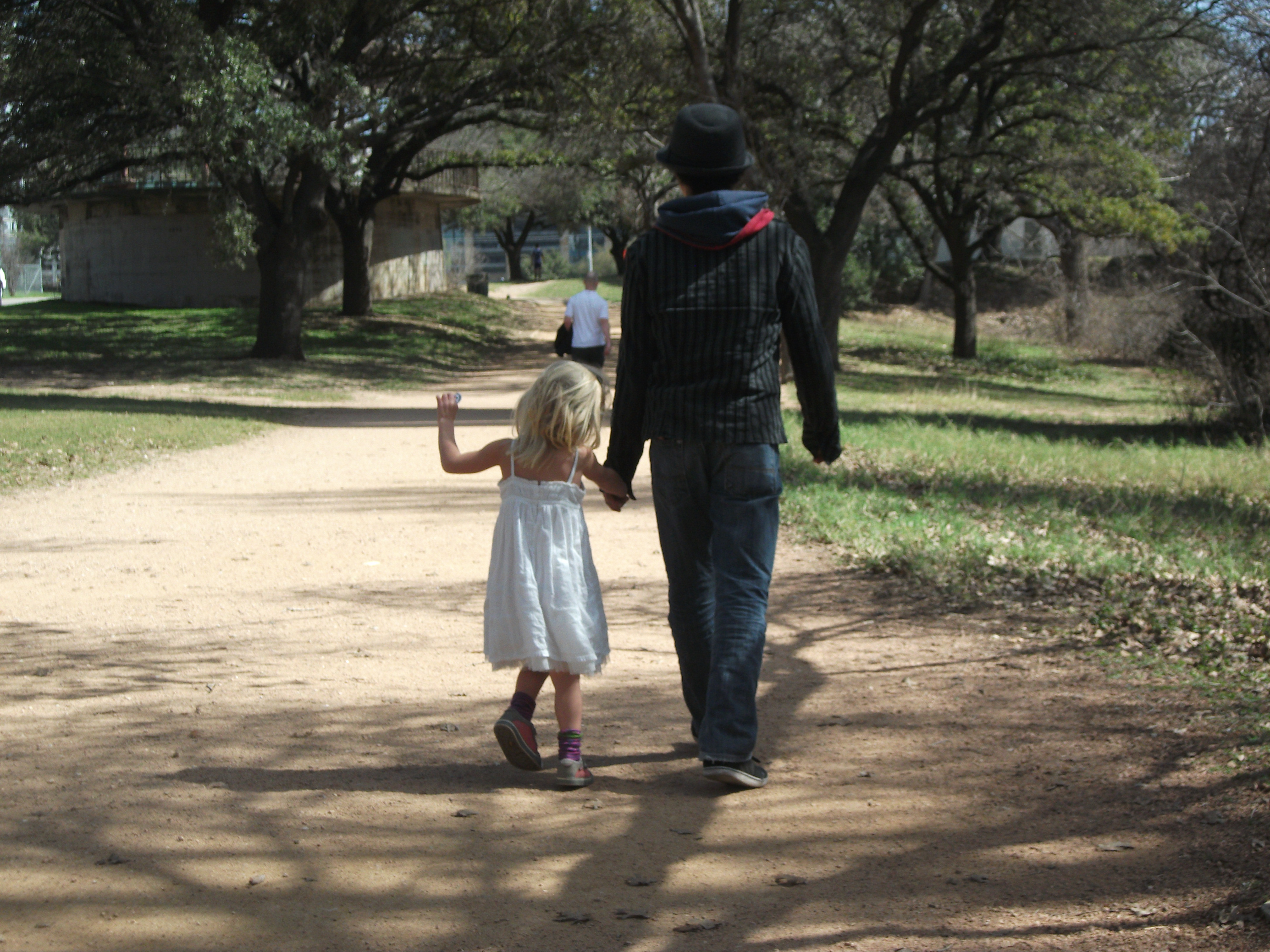
My son walking with his cousin


"A good traveler has no fixed plans and is not intent on arriving." ~Lao Tzu
 
Parenting is a journey you cannot fully plan, and if you try to stick religiously to a plan, you put yourself and your child(ren) in harms way. It is dangerous to watch the plan more than the people. 
 
Of course, goals and plans and places you are heading are a valuable part of the parenting journey. Without them we are at risk of simply wandering the path of least resistance regardless of how unhealthy it might be, or for people with an "it must be hard work to be worthy" personality, you might choose the path of most resistance, again, regardless of how unhealthy it might be. 
 
"A good traveler has no fixed plans and is not intent on arriving." ~Lao Tzu
 
The journey of parenting has no *fixed* plans. But plans, dreams, ideas, goals, pictures imagined and heading toward, these are wonderful. These give us passion, purpose, and help us see our progress, recognize our arrivals. 
 
"A good traveler has no fixed plans and is not intent on arriving." ~Lao Tzu
 
As a parent, there are many arrivals. There are many moments to celebrate and recognize. Don't miss those! 
 
But also, in the journey of parenting, there is no ultimate arriving. If our children are fairly regular, fairly irregular, dead or alive, close or far, the travel can last as long as it is right for it to last, so do not be intent on arriving. Notice the arrivals along the way, celebrate and remember them. But travel to wherever and however and for whatever time it takes.
 
“Remember, the timetable is arbitrary. There is no point at which a child must be done and done is an illusion.” ~Lynette Louise aka The Brain Broad 
 
Happy Tuesday, friends!!!
Enjoy any and all travels you are in the midst of!
 

Friday, March 10, 2023

Autism Answer: Fix My Child


When parents want to fix their child, or try to find a professional who can fix their child, they do not really mean they want someone to fix their child. To mend or repair them.
 
They mean they want things to be less hard for themselves and their child. They mean they want people to stop staring and judging them for behaviors or appearances. They mean they want to know what to do when they see their child hurting, screaming, behaving strangely. They mean they want to know what to do when traditional parenting tips, comments, and expectations seem unreachable or ridiculous.
 
That's not to say they don't want to help their child solve problems brought on by disability or dysfunction. They do. And they may say they want to fix their child.
 
I think they mean they want a future for themselves and their child that seems healthy, happy, successful, possible. They mean they want to know what that could look like and what to do to help it happen. 
 
They mean they want to see their child without the interference of needing to fit that child into expectations that were built before the child was born. They want to see who their child is and who they can be, know they can help them overcome the hard stuff and find what works for them, know the world will have space for them to grow and carve out a life that suites them. 
 
They mean they want to know what to do to make all of this happen and to not be too lost and overwhelmed and beaten up along the way. 
 
That, I think, is what they mean when they say they want someone to fix their child. I don't think they are trying to call their child broken, exactly. I think they want to help them be the best version of themselves with the most amount of confidence and the greatest opportunities for independence or growth. And in many cases that means finding uncommon answers that ask for more than we're used to asking for. Answers that bring us to a place where we reevaluate so much we once took for granted. 

When someone says they want to fix their child, I think it is because they want to reconstruct, renovate, and overhaul their situation, their child's situation, and reactions to them and their situation.
 
Whether or not we have children of our own at the moment, we can help make raising children easier on others. We can reconstruct, renovate, and overhaul the way we react and the expectations we have when spending time in public spaces. 

We can fix the feeling of needing to fix things.
 
Hugs, smiles, and love!!
 
 
NOTE: Those of you raising or helping raise children, those of you hoping to have a little help knowing what to do, please visit the All Brains Grow website for access to that help. It is a beautiful place with beautiful ideas!

Saturday, January 21, 2023

Autism Answer: How "You" are You?


Me at the bus stop

"She's so nice; such a sweet quiet girl," they would say about me. They were saying it because, well, I was being nice and, also, quiet.
 
I don't know when I started being nice, sweet, and quiet because they said I was, and I liked that they said I was, but I did. I remember seeking that input, wanting to know they were still thinking of me as nice, sweet, and quiet. Wanting them to validate that I was still the me they had said I was. 
 
I was a child. I was newer to the world than the adults. I was someone, born as someone, but I was also a small someone. I looked up at the grown-ups and was told what to do by them and grew in the direction of attention. I grew out of a seed that was me, but my growth was encouraged and influenced and fed by those I listened to and learned from. 
 
It was not their fault, the adults, when my attempts at being nice, sweet, and quiet became unhealthy for me. It was me, trying to have people think of me as nice, sweet, and quiet that was dangerous. Rather than explore what it really means for me to be nice, to be quiet, to be sweet, I chose - for several years - to try and elicit a response from people that proved they thought I was nice, sweet, and quiet. 
 
During those years I failed to learn that it is nice to say no to what I don't want or what I don't believe in, it is sweet to believe in someone so much that you push them to try harder (my brothers too often bore the brunt of my attempts at sweetness while I talked condescendingly to them and let them give up) and being quiet because I was afraid to say the wrong thing was not something to be proud of; being quiet because I want to learn what others have to say and give them space to say it, that was my best kind of quiet.
 
I pondered much of this often when I became a mother. How to encourage healthy growth in the direction of who my sons are. How to tell them who I see when I see them without taking away any potential for all the other thems they might be, and without pushing them to fit into any expectations. Man, it's not so simple!
 
It's such a common suggestion: Be yourself. Discover yourself. Don't be who you think others want you to be. etc. 
 
And it's good stuff. Yet, we are always ourselves, aren't we? I go back to the time I was trying to fit into a description of me and when I listen to my thoughts from that time, they were me. They were me trying to be a me that is complimented, or noticed, or impressive, or whatever it was I hoped for at the time. But, I was me. 
 
As a parent, I try to leave room for who my children choose to be. But I also tell them who I see. I can't help it. I love who I see.
 
When our loved ones have certain types of disabilities or disorders I think it can be even harder to get this right. The challenges of communication, the uncommon behaviors, can challenge us in ways we are unprepared for. We start seeing what we don't like, what we are dealing with, what we think we are supposed to be looking for, what is clashing with the environment, and even when we put a positive spin on what we're seeing we're still seeing from a place of behaviors, where things are often lost in translation. Behaviors are communication, but we are often unequipped to understand them in any useful or real way. 
 
As we help them discover who they are, help them grow in the direction of attention, we may make the mistake of giving the wrong attention in the wrong places. 
 
And as our children grow they will always be themselves, but with too much pollution in their environment they will be unable to grow into their best selves. (I hope you'll visit the All Brains Grow website to learn how to help our special needs children grow in healthy powerful wonderful ways.)
 
It think it's true, you should be true to who you are. I think being yourself, discovering who you are and what you really believe, is a valuable pursuit. 
 
This does not mean we should ignore who the world says they see when they see us. It is feedback. It is worth incorporating in our own estimation of who we are. 
 
I am nice, but not everyone would think so. Because being nice, I now know, is not the same in everyone's opinion. But in mine, I am nice. 
 
So, know who you are. Be you.
 
Be you, in this world with others. 
 
"The world will ask you who you are, and if you do not know, it will tell you." ~Carl Jung

Monday, November 28, 2022

Autism Answers: Little Shifts

 
Shifting view of a moment out our front door window


I'm surrounded by little shifts, and I'm shifting in little ways. Each shift, though, brings me to somewhere far enough from the first shift to make all the difference.
 
Of course, this has been happening throughout my life and will continue to happen. Lately, though, I'm noticing the shifts.
 
I was living in one country and now I am living in another. It doesn't matter which countries for me to make the point I want to make, and in fact would distract us. Suffice it to say, the countries are not very different from each other and yet, simultaneously, they are. It is all the small shifts in difference that make all the difference.
 
For me, this country is encouraging more comfort inside and outside myself. It is helping me breathe in and out more easily. 
 
When we are struggling to breathe easily, when our homes or work places or communities feel suffocating or overwhelming, we can take advantage of little shifts. We can do them purposely, we can ask for them specifically, we can notice over time if they are helping. 
 
My autistic brothers have always seemed to be more affected by shifts. More influenced, more in need of accommodating them or dealing with them or, when we've shifted well, being freed into a more comfortable state because of them. 
 
Long ago doctors would prescribe moving to a more appropriate environment when an illness or unwellness plagued someone. This is something we can do, with or without a prescription. Sometimes we'll know what we need, sometimes we won't, always we can notice how we feel living inside of our shifting world. 
 
I don't think I need to live in this country to be happy and breathe easy. But I do notice it happening and am noticing, best I can, why it's happening. In that way, I can attempt to bring those shifts with me wherever I go, if I go. 
 
I like noticing that the shifts are little because that feels easier to do on my own. Little shifts. And noticing the big difference small shifts are making reminds me not to throw my hands up in defeat if I can only do small shifts. Instead, I feel powerful shifting a little. 
 
Each little shift is a thing I did that might make a big difference for me, for someone I love, or for the planet I love. 
 
We are surrounded by our environment; our home, our thoughts, our world. Each shift shifts us.
 
Little shifts are what big shifts can be made of.
 

Monday, September 27, 2021

Autism Answer: Spilling Secrets


Shhhhhh.... don't tell Dr. Lynette Louise (aka "The Brain Broad" aka "My Mom") I showed you this but I've been offered insider access to a transcript from the upcoming All Brains Grow platform being built by Lynette and Louloua Smadi (author of From Client to Clinician) for parents and therapists and clinicians and I snuck this itty bitty little bit to show you because I feel like it encapsulates the reason you're also going to want to have access:
 
"That question of when to do what to do, why to do it, how to do it, is the question that swims in a parent's head and says, I am at a loss. The experts must know, and the experts know a lot more now than they did back then. But they still don't know, because though an expert, occupational therapist or a speech therapist, brain therapist, may know a lot about their particular subject, they don't know that much about your particular child." ~Dr. Lynette Louise ("The Brain Broad")
 
Do you get what I mean? How she understands the question you have of what to do, why to do it, and how to do it, how she understands that you are going to want expert inclusion but you are the one with your child most of the time, you are the one who knows them in more of their moments and you are the one who needs to know what do do, why to do it, and how to do it in more of their moments. All the information they are putting together for All Brains Grow is there to give you that. That answer. What to do, why to do it, and how to do it. 
 
Detailed, entertaining, unique, and effective brain, play, and behavior stuff. 
 
It will be quite a long while before All Brains Grow will be complete and ready for consumption. But until then, check out some of the books and videos and interviews that are available. Stuff that is insightful and offers ideas on what, how, and why. These can help lay the groundwork for the exciting new way of being we get to learn via All Brains Grow. And here's the thing, all brains grow whether you understand how to influence that growth or not. But if you understand, and Lynette and Louloua do help you understand, you can play a purposeful role in that growth. 
 
My friends, I highly recommend it!
 
A few links for now:
Louloua's book, From Client to Clinician: The Transformative Power of Neurofeedback Therapy for Families Living with Autism and Other Special Needs - https://www.clienttoclinician.com/
 
YouTube playlist of Learning with Lynette - interviews with Lynette and Louloua - https://www.youtube.com/playlist...
 
Fix it in Five with The Brain Broad - All episodes FREE on YouTube - https://www.youtube.com/watch?v=LQb5uz1eUIw...
 
Books, blogs, and more on Lynette's websites - www.lynettelouise.com / www.brainbody.net
 
 
Okay, no more sneaking you stuff from behind the scenes. 
 
At least for today. Let's see how this goes first. Hopefully you won't tell on me and I won't get in trouble. ;D
 

Friday, April 17, 2020

Autism Answer: The Brain Broad Talks about Lust - Helping Teenagers with Autism through Puberty and Beyond

The following article originally appeared on Disabled-World.com and SexualDiversity.org - both are excellent resources as well as fantastic places to submit your writing and releases. I added the "sister memory" part here for you, my personal blog readers. I know you kinda get me. :D


“I share this with you because I want you to understand the rest of the world doesn’t want to deal with this. So it’s up to caregivers, direct service providers, and parents. Come on, guys. Get comfortable.”

That is the line Dr. Lynette Louise, aka The Brain Broad, leaves us with in a recent video from her Autism ABCs series. It is in the video for the letter “L” which, she decides, stands for “Lust.” 

Dr. Lynette Louise is a renowned international brain change and behavior expert specializing in autism. And, importantly, she is also the single mother (in fact, she is my mother!) of eight now grown children. Six were adopted, and four landed on the autism spectrum. (Only one still retains the label.)

April is both Autism Awareness Month and Sexual Assault Awareness and Prevention Month. Because Dr. Lynette Louise is an expert in both, she always chooses to offer help and answers free during this time of the year. 

Considering global efforts to stay home or shelter in place, Lynette has been releasing one short video daily, in an Autism ABCs series to YouTube. Each day represented by a new letter in the English alphabet. 

“L” for lust is particularly timely. And incredibly valuable. 

“I like using the word lust in this category because most people don’t think of someone with autism, especially someone in a lower functioning situation, they don’t think of it so much as a sexual drive as a puberty problem,” she tells us. “But testosterone in boys, and in girls – when a girl is reaching her time for ovulation she doesn’t just have estrogen and progesterone, she also gets testosterone to increase her sexual drive – so sexual drive is a big subject here.”

It is challenging for most parents to teach their children about sex, about consent, about appropriate behavior. But when the person you are teaching has autism, or is otherwise uniquely challenged to learn social skills, understand their body, and/or has sensory issues, it is far more difficult. 

“You’re going to have to help them,” Lynette tells us, upfront and strong but with understanding.

After all, she not only helped all of her own children learn to understand and appropriately explore their sexual drive, but she also travels helping families globally. (Season two of her international docu-series FIX IT IN FIVE is largely about helping a young man and his single mom during this phase of life.)

“If you think of it as a sexual drive, a lust – lust for life but also, lust for sex - then maybe you can separate it out for them. Here’s an example. I say, ‘Yes, that’s a pillow. That feels great when you push your body against it. We all do it, though we do it differently. And we do it privately.’ And before I worry about the rest, I teach private time."

Lynette’s candor is refreshing, but also necessary. An example for those of us who will need to be candid as we teach this. 

Not only are disabled and cognitively challenged people at greater risk of being inappropriate sexually, which leads to misunderstanding and uncomfortable cruelties, but they are also at greater risk of being sexually abused. Particularly as they misunderstand and act out and seek sensory gratification during puberty.


Sister Memory: When a few of my brothers were going through puberty, and we were living on the road homeschooling in an RV as well as various resorts (yes, my life is awesome, thank you for noticing!) we were often squished into compact sleeping quarters. This is not conducive to an easy exploration of sex during puberty, even for the more neuro-typical among us. And for my brothers, well, it was equally challenging if not a bit stranger. Luckily, my mom had exampled and taught a comfortable, kind, strong style regarding this topic. She showed us how to have these important conversations. I won't pretend I was always actually comfortable (c'mon, I was saying things like, "You can't hump my back when we sleep but I will show you a place you can go for privacy because the desire you're having is natural," and, "it is not okay to take a picture of your erect penis and show it to people, although I see you are proud of it. Let me give you ideas for how you can be proud of your penis without hurting others or getting yourself in trouble." so, ya, I was a little awkward) but I was always certain that freaking out or being angry in my discomfort would not only hurt them but make all of our lives more challenging in the long run.  


Taking on the role of teaching your child or charge about what is happening to their body, how to be private as they explore their lust, and who they can safely communicate questions or curiosities with, is not only going to help them grow a healthy understanding of themselves and sex, but also helps them stay safe. They are more likely to avoid abuse or tell you when something is happening to them. 

“Think back,” Lynette encourages us toward the end of the video. “Puberty’s rough. Puberty with no assistance, no understanding of what to do with this feeling, and where it’s okay and where it isn’t okay, and who you can ask and who you can’t ask; puberty without that guidance is a train wreck. It’s a problem that’s going to grow so big you’ll end up maybe putting your child in a group home. When all you had to do is get comfortable with saying, ‘Hey, maybe he’s acting the way he’s acting because he’s horny.’ Or ‘Possibly, she’s acting the way she’s acting because she wants to connect with somebody. And connect her genitals.’ This is real. This is your job as parents and caregivers.”

Please watch this valuable video. And, more than that, please share it with others. 

The truth is, this wouldn’t be nearly as hard for us to do and be comfortable with if our communities, our neighborhoods, and our societies were sufficiently educated and properly involved. 

Autism ABCs with Dr. Lynette Louise: “L” is for Lust
# # #

A few of us at the resort